Veja como um revestimento de silicone translúcido ajudou a proteger o telhado do Museu de Arte Kimbell, preservando ao mesmo tempo sua aparência histórica.
O Museu de Arte Kimbell, em Fort Worth, no Texas, é amplamente reconhecido como uma das obras mais aclamadas do arquiteto Louis Kahn. Concluído em 1972, as características estruturas abobadadas de concreto do museu e seu telhado de cobre revestido de chumbo tornaram-se traços marcantes da identidade arquitetônica do edifício.
Quando o museu buscou uma solução para ajudar a evitar o escoamento de chumbo do sistema de telhado, preservar a aparência do projeto original foi um requisito fundamental do projeto.
O revestimento translúcido Optic™ foi escolhido para ajudar a encapsular a superfície do telhado metálico, proporcionando proteção de longo prazo e, ao mesmo tempo, preservando a estética característica do telhado.
Projetado por Louis Kahn, um dos arquitetos mais influentes do século XX, o Museu de Arte Kimbell é conhecido pelo uso inovador da luz natural.
O edifício é composto por uma série de estruturas abobadadas de concreto, revestidas com chapas de cobre revestidas de chumbo. Claraboias posicionadas ao longo do ápice de cada abóbada permitem que a luz do dia entre nas galerias, onde é difusa pelos interiores de concreto, criando a iluminação suave que se tornou sinônimo da experiência no museu.
Como o sistema de cobertura desempenha um papel tão importante na aparência e no desempenho do edifício, qualquer estratégia de restauração ou proteção deve ter como objetivo minimizar o impacto visual.
Com o passar do tempo, os telhados metálicos revestidos com chumbo podem contribuir para problemas de escoamento que podem afetar as áreas vizinhas.
O museu precisava de uma solução que ajudasse a resolver o problema do escoamento de chumbo, preservando ao mesmo tempo o caráter visual do telhado. As abordagens tradicionais de reforma ou substituição poderiam ter alterado a aparência do prédio e exigido uma intervenção mais abrangente.
O projeto exigia, portanto, uma solução capaz de oferecer proteção a longo prazo, mantendo a estética arquitetônica original.
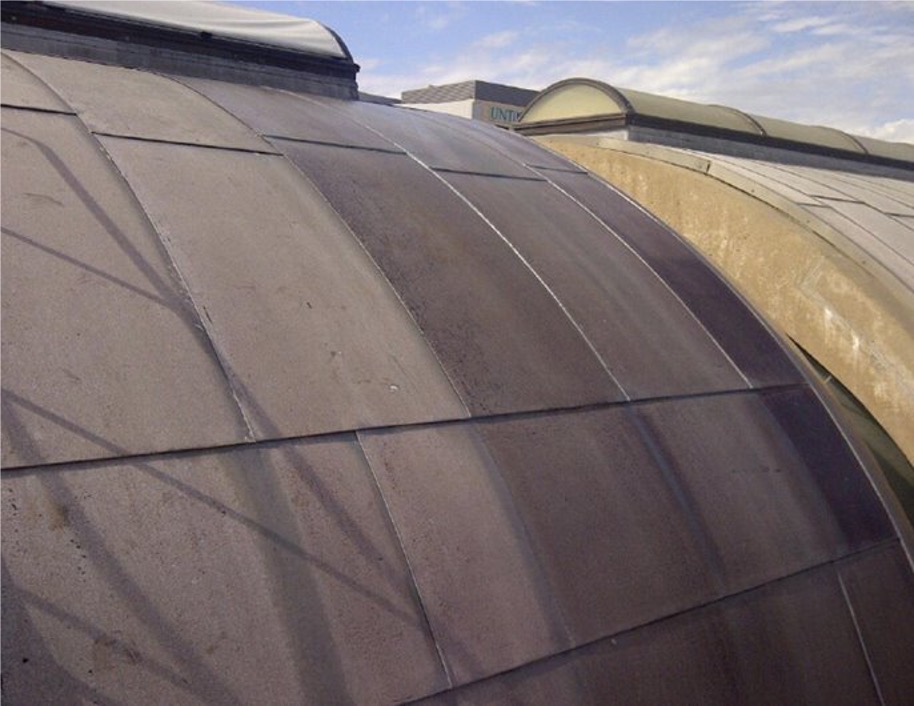
O revestimento translúcido Optic™ foi escolhido porque permitiu proteger o sistema de telhado sem alterar significativamente sua aparência.
O revestimento forma uma membrana elastomérica 100% de silicone projetada para permanecer:
Ao contrário dos revestimentos opacos, a formulação translúcida permite que o substrato subjacente permaneça visível, tornando-a particularmente adequada para edifícios históricos, marcos arquitetônicos e outros projetos em que a estética é um fator importante.
Além de ajudar a resolver as preocupações relacionadas ao escoamento de chumbo, o revestimento Optic oferece uma alternativa de longo prazo a projetos de reforma ou substituição mais invasivos.
O revestimento com baixo teor de COV geralmente pode ser aplicado com um mínimo de preparação da superfície e sem primer. Ele pode ser aplicado com rolo, rolo motorizado, equipamento de pulverização ou pincel e fica resistente à chuva em apenas 30 minutos.
O revestimento também pode ser aplicado em claraboias, permitindo a passagem da luz e, ao mesmo tempo, ajudando a proteger contra vazamentos.
Um dos aspectos mais notáveis deste projeto é a oportunidade de avaliar o desempenho a longo prazo em condições reais.
Durante uma visita ao local realizada em 2025, mais de dez anos após a instalação, o revestimento e o sistema de telhado continuavam em excelentes condições.
De acordo com o consultor em impermeabilização Harper Brawner:
"A instalação já tem mais de dez anos e parece nova. Não há perda evidente da espessura da película nem reversão do revestimento. Aplicamos o revestimento com baixo brilho para manter a aparência do cobre revestido, e o nível de brilho continua exatamente como na época da instalação. O revestimento impediu a descamação do revestimento de chumbo."
Essa observação oferece um exemplo prático de como um revestimento de silicone translúcido pode ajudar a garantir um desempenho duradouro, ao mesmo tempo em que preserva a aparência de um sistema de telhado histórico.
Em 1998, o Museu de Arte Kimbell recebeu o Prêmio de 25 Anos do Instituto Americano de Arquitetos. O prêmio reconhece edifícios que demonstraram importância arquitetônica duradoura e excelência contínua ao longo do tempo.
Arquiteto: Louis Kahn
Consultor em impermeabilização: Harper Brawner
O que é um revestimento translúcido para telhado?
Um revestimento translúcido para telhado é um revestimento protetor que permite que a aparência do substrato subjacente permaneça visível, ao mesmo tempo em que oferece benefícios de impermeabilização e durabilidade.
Por que usar um revestimento translúcido em um telhado metálico?
Os revestimentos translúcidos podem ajudar a proteger telhados metálicos, preservando ao mesmo tempo sua aparência original. Isso os torna particularmente úteis para edifícios históricos, marcos arquitetônicos e estruturas visualmente distintas.
Os revestimentos de silicone podem ajudar a conter o escoamento de chumbo?
Os revestimentos de silicone podem ser utilizados para encapsular determinadas superfícies de telhado, ajudando a criar uma barreira protetora que pode contribuir para reduzir o escoamento de chumbo dos substratos revestidos.
Quanto tempo duram os revestimentos de silicone para telhados?
A vida útil depende do substrato, das condições ambientais e das práticas de manutenção. No entanto, os revestimentos de silicone são amplamente reconhecidos por sua resistência a longo prazo à exposição aos raios UV, às intempéries e a temperaturas extremas.
É possível utilizar revestimentos de silicone em edifícios históricos?
Sim. Os revestimentos de silicone costumam ser considerados para edifícios históricos e de importância arquitetônica, pois oferecem proteção ao mesmo tempo em que minimizam as alterações na aparência do edifício.
Quais são os benefícios dos revestimentos de silicone para telhados?
Os revestimentos de silicone para telhados podem ajudar a proporcionar impermeabilização, resistência aos raios UV, flexibilidade, resistência às intempéries e durabilidade a longo prazo, ao mesmo tempo em que reduzem a necessidade de projetos mais invasivos de substituição do telhado.
Os resultados de desempenho são aqueles relatados pelos clientes e não devem ser considerados como típicos ou esperados em quaisquer outras circunstâncias. Os resultados de desempenho variam de acordo com diversos fatores relacionados ao processo. Os clientes em potencial devem basear-se exclusivamente em suas próprias técnicas de avaliação para determinar quais parâmetros de processamento são alcançáveis e ideais para suas necessidades específicas. Observe ainda que a Momentive não é endossada nem afiliada a nenhuma entidade proprietária do Museu de Arte Kimbell.

P.E., CSI, Líder de Desenvolvimento de Aplicações na Momentive Performance Materials Inc. Membro: IIBEC, ASTM C24, ISO TC59/SC8
Com mais de 25 anos de experiência global em selantes, adesivos e revestimentos para construção, Errol é especialista em envidraçamento estrutural e desempenho de selantes. Ele é bacharel em Engenharia Arquitetônica e mestre em Engenharia Civil.
Entre em contato com nossos especialistas em silicones para construção para obter orientação especializada adaptada às suas necessidades ou discuta seu projeto com um representante de vendas local hoje mesmo para descobrir as melhores soluções e percepções.
Nosso centro de documentos tem uma ampla gama de informações sobre produtos, documentação técnica, certificação, folhetos e fichas de vendas, além de estudos de caso de produtos relevantes e muito mais.
Explore nossa documentaçãoFique por dentro de insights exclusivos do setor, notícias sobre produtos, webinars e eventos.


